|
|
|
| |
| |
| Capitol Report |
#Listrak\DateStampLong#
|
The latest news from the State Capitol
|
Please do not reply directly to this email, as it returns to an unattended account.
You are welcome to contact me through this link.
|
Protecting Pennsylvania Ratepayers as Demand Grows
Over the past few months, I have written about why electricity prices in Pennsylvania and across the PJM region are rising and why this problem is already affecting households and small businesses. Below is a brief summary of the core points we have covered thus far, organized in a sequenced progression.
• Electricity demand is forecasted to rise rapidly for the first time in decades, driven by data centers, vehicle electrification, and a technology-dependent economy, while electricity generation has not kept pace.
• Because supply is not keeping up with expected demand, the market is responding through sharply higher prices, consistent with basic economic principles.
• The most visible signal of this imbalance is the surge in PJM capacity prices, which pay generators to be available in the future. Those prices increased nearly tenfold in once recent auction.
• Those capacity costs are passed directly to consumers by utilities, which do not set the prices and do not profit from them, explaining why higher bills are appearing now.
• Large electricity users, particularly data centers, are entering the market at a scale that can strain the grid and further increase prices if they rely on the same limited supply as consumers.
• The only durable solution is to increase electricity supply, not to attempt to regulate or litigate away demand projections.
• Ending Pennsylvania’s participation in RGGI reduced regulatory uncertainty and reopened the door to new generation investment, while approaches such as requiring large customers to bring their own generation offer a way to protect consumers.
These conclusions lead directly to the next phase of the discussion. If new generation is required, we must decide who builds it, who pays for it, and how large new loads connect to the grid without shifting costs onto families and small businesses.
Without writing like a technocrat about rulemaking processes and the nuances of the various positions, let me say this easily and frankly: the whole issue is about who is going to pay for the various pieces of the new generation build?
| In December, I spoke on a panel addressing the National Council on Electricity Policy nationwide. My emphasis was again precisely this issue: who will pay? |
Let’s imagine a scenario where a large-demand customer wants to build a facility in the middle of Pennsylvania a hundred miles away from the nearest electricity generation plant. If the long-term power agreement between Constellation and Microsoft is any indication, one of these customers could consume the power of an entire nuclear power plant. So, new generation must be built to accommodate them and us (the ratepayers).
The argument advanced by the large power generators (those who make the electricity) is that they should be free to negotiate long-term power purchase agreements with whomever they want. Afterall, the power arguably belongs to the company and its shareholders, as it is not a public asset in a deregulated state like ours.
Think of the arrangement between a large data user like a social media giant and a very large power producer. Both have financial resources seemingly facing exponential growth. As a business matter, nothing would make them happier than entering into long-term agreements for the large consumer to purchase all the power they need from one generator for the next twenty years at a negotiated price. Such an arrangement mitigates market risks for the generator, and it mitigates reliability, regulatory and market risk for the large consumer. In fact, the large consumer would certainly pay a premium price today to have business certainty into the future.
And as an aside, recall that Three Mile Island Unit 1 closed in September 2019 for economic reasons (not safety). Cheap natural gas, which sets the price of power, suppressed wholesale power prices. The market did not value always-on nuclear power, so, Unit 1 was shut down. Constellation (the now-owner of Unit 1) entered into a long-term power purchase agreement with Microsoft to restart Unit 1 via the renamed Crane Clean Energy Center. (Important side note: Unit 2 has been shut down since the incident in 1979 and is in long-term decommissioning. It is under separate ownership and is not being reopened.)
So, there are economic reasons for both large generators and large consumers to reach long-term agreements, stabilizing their costs and mitigating long-term risk.
But we have not built enough dispatchable power generation in the last ten years (meaning power that it will be on and available in any circumstance). We have increased solar capacity by about 7-8 times in the last decade, to the point where we have added tens of gigawatts (GW) to the grid. That truly is a lot of power and a significant step forward. For reference, one nuclear power plant generates over 0.8 GW. But it is not always available, meaning it is not reliable. Non-dispatchable renewables have a role in offsetting some large generation when they are available, but they will not solve the large-scale demand needs of the near future
So, we consumers and small businesses would be in competition with the large consumers for the available reliable power, unless one thing happens: we build new reliable, dispatchable power. The question again, my friends, is who will build it, and who will pay for it?
That is the entire debate expressed very simply.
I have teased my position in recent weeks, so here it is. I favor a hybrid of Bring Your Own Generation (BYOG). The BYOG idea is that large consumers are responsible for all the costs of providing their own generation and the costs of connecting themselves to the grid (including the transmission and distribution buildout). That keeps all the costs off the ratepayers. I had the pleasure of sitting next to a senior State Senator from Wyoming (and the former Adjutant General of that state) at my last meeting of the NCSL Energy Supply Task Force. He told me about their model, which is running now like a successful second Gold Rush. They implemented BYOG, and the data center companies jumped at the chance. He said they are in the midst of building about three dozen data centers in eastern Wyoming.
It is a far more expensive solution for the large consumer, but it offers regulatory certainty in a political landscape (like ours) filled with nuanced, competitive uncertainty. Large consumers need the power now, and they are – in Wyoming – willing to pay a premium for it (just as they are willing to pay a premium to reopen closed nuclear plants). It also ensures that large consumers bear the risk that they will not use all the power they claim to need. Imagine building it and those customers never arrive. We would be left holding the financial bag. Make those who need it bear the risk, not ratepayers.
The result is an economic power generation gold rush for consumers of the state.
Our difficulty with BYOG in Pennsylvania is that we are a deregulated state. Wyoming is a regulated state, which means the local utility also owns and manages power generation and passes those costs along to all ratepayers. Pennsylvania deregulated its generation in 1996 with the Electricity Generation Customer Choice and Competition Act. We created a favorable market environment for new generation in our state, because the market drives generation investment instead of utilities.
I want large consumers to invest in Pennsylvania by way of new power generation in our Commonwealth. We have the resources for it, which are now largely stagnant. I want our own power Gold Rush.
Republicans and Democrats alike in the General Assembly and the Governor came to the same conclusion when we ended the Governor’s executive order entering us into RGGI. Since those orders were subject to litigation, the program was never implemented in our Commonwealth, but it hovered like a giant regulatory-risk dome over our ability to produce new generation. That risk is now eliminated, so we can reap the economic benefit of what comes next.
Next week, I will participate in a Policy Hearing at the Maryland House of Delegates on these issues of cost allocation. Maryland and states like them are very much a part of our problem in Pennsylvania, since they have collapsed their own ability to provide power for their ratepayers. Now, we and other energy-rich states provide for them. Since we belong to the same regional grid, we pay the price. I will write more about that next week.
|
High School Seniors Eligible for America250PA Scholarship
Pennsylvania high school seniors may apply for one of 25 scholarships worth $10,000 each through the America250PA Semiquincentennial Scholarship Program. The scholarships support students who plan to attend a Pennsylvania college or university during the 2026–27 academic year.
America250PA will select recipients based on their demonstrated understanding of civic values as the nation approaches the 250th anniversary of American independence. Some participating colleges and universities will match America250PA scholarships with additional contributions of up to $10,000.
America250PA serves as Pennsylvania’s official commission for the United States Semiquincentennial. The commission highlights the Commonwealth’s role in shaping American history and creates opportunities for residents to engage in this historic milestone.
The application deadline is Jan. 31. More information is available here.
|
Looking for Summer Work? PennDOT Hiring College Students
PennDOT is hiring college students to supplement its permanent workforce from May through August.
These positions include seasonal maintenance work, crash system input and analysis, and maintenance and custodial services at roadside rest facilities. Many students also perform laboring and flagging duties in maintenance organizations and at highway worksites.
To qualify, applicants must be Pennsylvania residents or be enrolled full time or part time in a two-year, bachelor’s, or advanced degree program at a Pennsylvania college or university. Applicants must also be at least 18 years old and in good academic standing, defined as a grade point average of 2.0 or higher.
The hourly rate for these positions is $17.38.
Interested applicants should contact my office before Friday, January 16, and also apply online here.
|
Legislative Fellowship Program Summer 2026 applications now open
Applications for the Summer 2026 Pennsylvania House of Representatives Legislative Fellowship Program are now being accepted. Applications for the Summer Semester are due on Monday, March 2. The Fellowship Program is based in Pennsylvania’s magnificent Capitol Building in Harrisburg. Fellows are assigned to work in House Standing Committees or House Leadership offices, are compensated for their work (which may also include college credit). They will have the opportunity to draft and present their own legislation, attend meet-and-greets with various public officials and staff, and tour some of the Commonwealth’s historic public spaces, to name a few. The Summer Semester will run from Thursday, June 4 through Thursday August 6, 2026.
Qualified applicants must meet the following criteria:
1. College undergraduate juniors or seniors, graduate students, or law school students.
2. Enrolled in a Pennsylvania college/university, or a Pennsylvania resident enrolled in an out-of-state institution.
3. Pursuing any major with a GPA of 3.0 or higher.
If you know of any college students who would benefit from the Fellowship Program, please invite them to visit the website at: pahousefellowship.us. Applications can be submitted via email to: pahousefellowship@pabmc.net.
|
More People Can Save Through PA ABLE
The PA ABLE Savings Program, which provides a tax-free way for people with disabilities to save, now has expanded program eligibility, allowing more Pennsylvanians to open a PA ABLE account.
Individuals can now open an account if their disability began before age 46. Previously, the disability must have occurred prior to the age of 26. The expansion is the result of a change in federal law.
Since 2017, PA ABLE has helped provide financial security for Pennsylvanians with disabilities. It allows people to contribute up to $20,000 annually without impacting eligibility for important disability benefits like Medical Assistance (Medicaid) or Supplemental Security Income (SSI). Savings can be used for a wide variety of disability-related expenses, and contributions can be deducted from PA state income taxes.
To learn more about saving with PA ABLE, visit paable.gov or call 855-529-ABLE (2253).
|
Around the District
Chester County to Kick Off America’s 250th Anniversary Year
Chester County will host a kickoff celebration to mark the start of the nation’s 250th anniversary year. The event will take place Thursday, Jan. 16, from 1 to 2:30 p.m. at the Chester County History Center, 225 North High Street, West Chester.
The gathering will launch a year of local programming and commemorations tied to the 250th anniversary of the founding of the United States. Attendees will learn how Chester County plans to recognize this historic milestone and how community members may participate throughout the year.
Advance registration is requested. Please RSVP here.
Photo Credit: Facebook
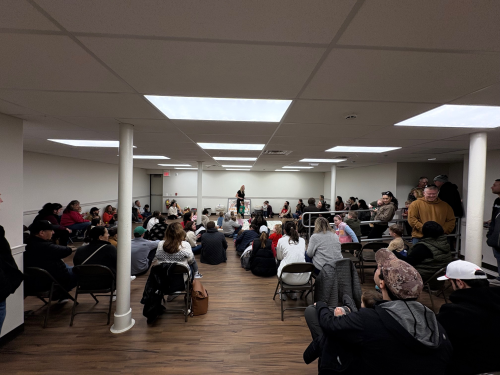
Concord Township Community Center Rental Space
Concord Township now offers the lower level of the Community Center for rental by Concord Township residents. This space works well for business meetings, birthday parties, silent auctions, and other small events. It accommodates up to 70 people.
For more information or to inquire about availability, please email parksandrec@concordtownship.org
Photo credit: Facebook
|
Bravo Zulu
*The BZ pennants are hoisted as a part of Navy/Marine Corps custom to communicate “GOOD JOB!”
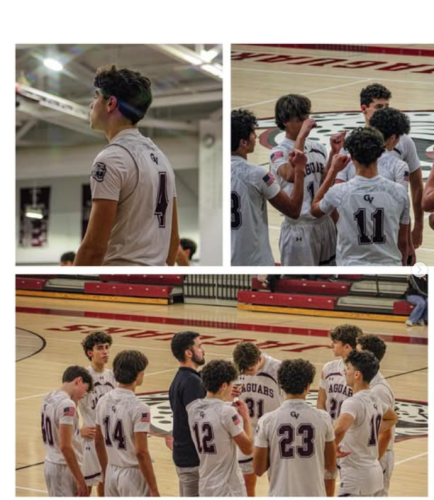
Garnet Valley Basketball Earns Road Win at Harriton
Garnet Valley Basketball improved to 9-2 on the season with a 63-48 road victory over Harriton. The Jaguars controlled the game and secured another important win away from home.
Photo Credit: Instagram
Jags Women’s Basketball Wins
The Garnet Valley Women’s Basketball team bounced back in a commanding win against Harriton, 42-19. This keeps the Jags at the top of the District and moves them to 10-1 on the season.
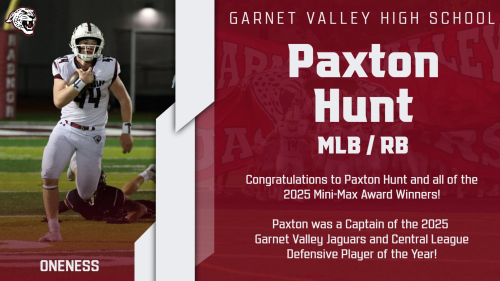
Paxton Hunt Mini Max High School Award Winner
Paxton Hunt earned the Mini Max High School Award for the state of Pennsylvania. Coaches across the state nominated 55 players from their schools during the 2025 season. Selection criteria included on-field performance, academics, and community service. Congratulations to Paxton on this well-earned recognition.
Photo Credit: Facebook
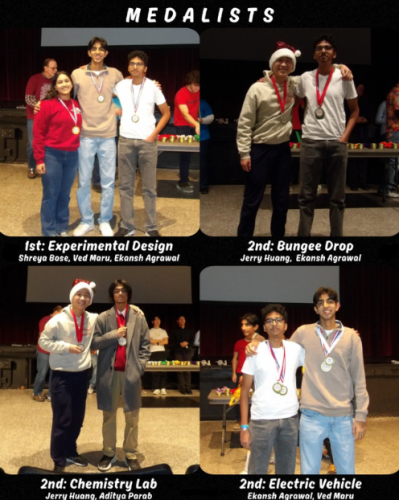
Garnet Valley Science Olympiad
Garnet Valley Science Olympiad placed ninth out of 49 schools at the Brandywine Valley Forge Invitational. In total, 18 students earned top placements. First-place finishers include Shreya Bose, Ved Maru, and Ekansh Agrawal in Experimental Design. Jerry Huang and Ekansh Agrawal earned second place in the Bungee Drop event. Jerry Huang and Aditya Parab also earned second place in Chemistry Lab.
Photo Credit: Instagram
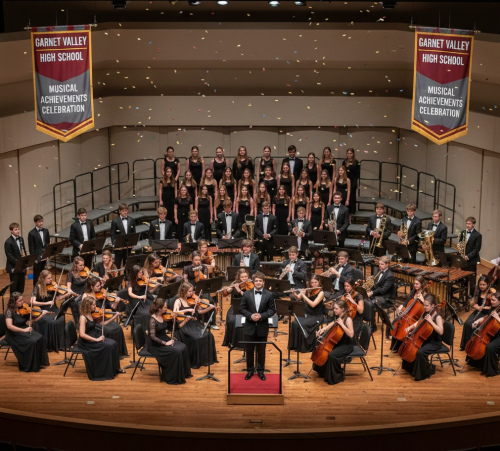
Garnet Valley Musicians Selected to PMEA
Nineteen Garnet Valley High School students earned selection to the Pennsylvania Music Educators Association District 12 Honors Music Ensembles through a highly competitive audition process.
More than 700 students from about 50 high schools across Delaware County, Chester County and Philadelphia auditioned. The Pennsylvania Music Educators Association supports music education statewide through performance and learning opportunities. Students selected at the district level may audition for advancement to the Region level and continue on to PMEA All-State.
Congratulations to these Garnet Valley musicians on this accomplishment.
Photo Credit: Facebook
Garnet Valley Wrestling Wins
Garnet Valley Men’s Wrestling earned a win over St. Joseph’s Prep in the Rage in the Cage quarterfinals, taking 10 of 13 matches, including one technical fall and two falls. Congratulations to the team on a strong performance.
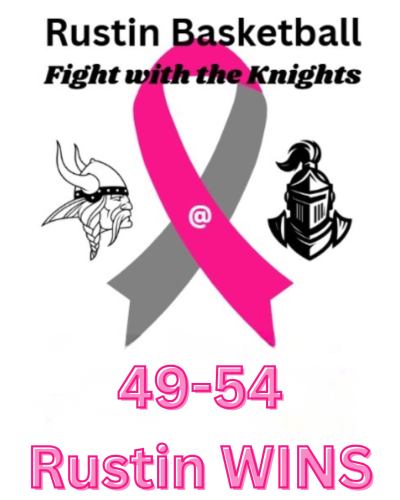
Rustin Men’s Basketball Wins
Rustin Men’s Basketball earned a 54-49 win over the East Vikings. The Golden Knights also hosted a Fight with the Knights event during the game to support families in the community facing cancer. The team raised funds through baked goods sales and raffle baskets. The night combined strong play on the court with meaningful community support.
Photo Credit: Instagram
Dean’s List Honorees
Joseph Williamson, Elmira College, Biology
Abbie Lukens, Belmont University, Music Therapy
Collin Kelly, Belmont University, Audio Engineering Technology
President’s List Honorees
Gage Blazina, Southern New Hampshire University, Information Technology
Louisa Li, Southern New Hampshire University, Graphic Design
|
|
| Office Locations |
| District Office: |
| One Beaver Valley Road | (intersection of Route 202 & Naamans Creek Road) Chadds Ford, PA 19317-9012 | Phone (610) 358-5925 | FAX: 610-358-5933 |
| Capitol Office: |
| 3 East Wing, P.O. Box 202160, Harrisburg, PA 17120-2160 | Phone: 717-783-3038 | FAX: 717-787-7604 |
| |
|
|
.png?param=0.4977210092659431)


.png)